
Key Takeaways
- Google has officially ended support for FAQ rich results, completing a phased rollout that began in 2023.
- Most websites have not been eligible for FAQ rich results for nearly three years, so the practical impact on search visibility is minimal.
- The announcement does not mean FAQ schema has lost its value.
- Structured FAQ markup can still help AI-powered search engines better understand your content.
- Website owners should keep existing FAQ schema and continue using it where a question-and-answer format naturally fits.
Google has officially ended support for Google FAQ rich results, bringing a long-running transition to a close.
For many marketers, the announcement may sound like a significant change. In reality, most websites stopped receiving FAQ rich results back in 2023 when Google limited the feature to government and health websites. The latest update simply formalizes what many SEO professionals have already observed in search results.
Some website owners may see the news as a reason to remove FAQ markup altogether. That would likely be a mistake. While FAQ rich results have disappeared from Google’s search results, structured FAQ data can still help search engines and AI platforms understand your content.
Here’s what changed, why it matters, and how you should approach FAQ schema moving forward.
What Changed With FAQ Rich Results?
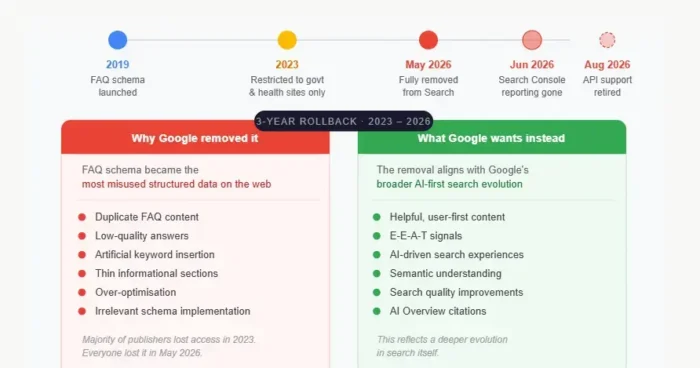
FAQ Rich Results Have Been Phased Out Since 2023
In September 2023, Google dramatically reduced the visibility of FAQ rich results, limiting them primarily to well-known government and health websites. For businesses, publishers, and most other organizations, the expandable FAQ dropdowns largely disappeared from search.
Since then, many SEO professionals have continued implementing FAQ schema despite the lack of visible rich results. Google’s latest documentation update confirms that the phased rollout is complete.
The Announcement Is a Documentation Update, Not a Ranking Change
The latest announcement is primarily a documentation update rather than a new ranking signal.
Google isn’t introducing a new algorithm update or changing how websites are indexed. Instead, the company has updated its Search Central documentation to reflect the current state of FAQ rich results.
For most websites, there shouldn’t be any noticeable change in traffic or search appearance because those rich results have already been absent for years.
Why You Shouldn’t Remove FAQ Schema
The announcement may lead some site owners to question whether FAQ schema is still worth keeping.
That’s understandable. If Google no longer displays Google FAQ rich results, removing the markup might seem like a logical cleanup task.
The reality is more nuanced.
FAQ Schema Still Helps AI Understand Your Content
Structured data has always served a broader purpose than generating rich results.
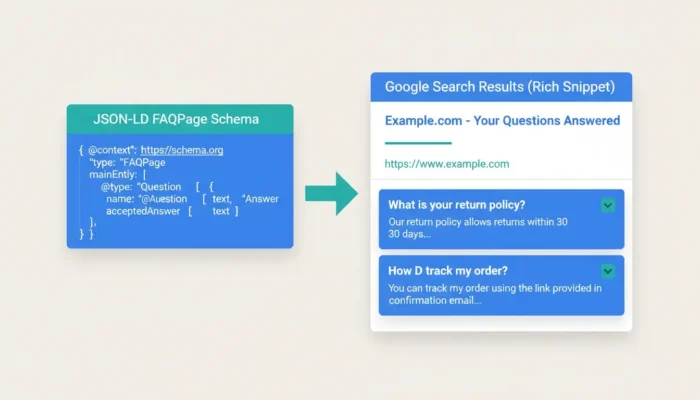
FAQ schema clearly identifies questions and answers, making it easier for machines to understand how information is organized on a page. As AI-powered search experiences become more common, that structured format may continue helping systems interpret and reference content more accurately.
While Google hasn’t confirmed that FAQ schema directly influences AI citations, structured content aligns with how large language models process information.
Removing It Offers Little Benefit
There’s also very little to gain from deleting existing FAQ schema.
Removing the markup won’t improve rankings, restore lost rich results, or provide meaningful performance gains for most websites. At the same time, it removes structured information that could continue supporting future search experiences.
If your FAQ markup accurately reflects the content on the page and follows Google’s structured data guidelines, leaving it in place is the more practical approach.
FAQ schema hasn’t disappeared so much as taken on a new job. The bigger risk isn’t losing rich results but reactively stripping out markup that could still earn a spot in AI-generated answers.
As AI-powered search continues to evolve, structured data may play an increasingly important role in helping search engines and AI platforms interpret content. Keeping well-implemented FAQ schema in place helps preserve that context while requiring little ongoing maintenance.
What These Changes Mean for Your SEO Strategy
Google’s announcement doesn’t require a new SEO playbook. Instead, it reinforces the importance of focusing on content quality and structured information rather than chasing individual search features.
Keep Existing FAQ Schema in Place
If your pages already use FAQ schema appropriately, there’s little reason to remove it simply because rich results are no longer displayed.
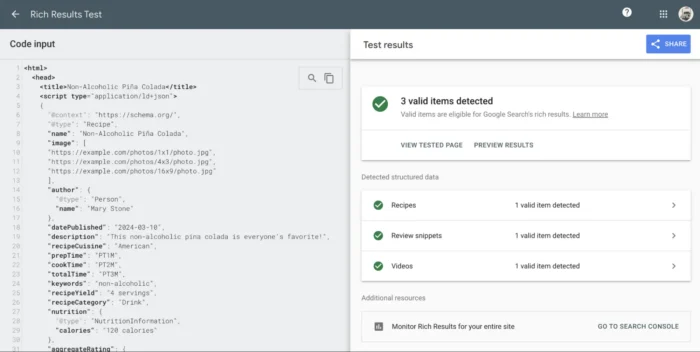
Structured data still helps define your content in a consistent, machine-readable format. Keeping that markup in place allows your pages to remain well organized for both traditional search engines and emerging AI experiences.
Use FAQ Schema Where It Makes Sense
FAQ schema should continue supporting content that naturally answers common questions.
Avoid adding FAQ sections solely to implement structured data. Instead, use the markup when it improves the page for readers and reflects the actual information being presented.
This approach aligns with Google’s long-standing guidance while creating content that’s easier for both users and AI systems to understand.
Structured Data Still Has a Role in AI Search
Search continues to evolve beyond traditional blue links, and structured data remains one way to help search engines interpret content.
Google’s decision to retire FAQ rich results doesn’t change that.
As AI-powered search experiences become more common, providing clear, well-organized information is likely to remain valuable. Schema markup is one tool that helps accomplish that, even if the visible search features associated with it have changed.
For marketers, the takeaway is simple. Continue using structured data where it genuinely improves your content and resist the temptation to remove useful markup based on assumptions about future search behavior.
FAQs
Why did Google remove FAQ rich results?
Google began limiting FAQ rich results in 2023 to reduce clutter in search results. The latest announcement officially ends support for the feature for most websites.
Should I remove FAQ schema from my website?
No. If your FAQ schema accurately reflects your content, keeping it in place remains a sensible approach. Removing it offers little benefit and could reduce the structured information available to search engines and AI platforms.
Does FAQ schema still help SEO?
FAQ schema no longer generates rich results for most websites, but it can still help search engines better understand your content. It also supports a structured format that may benefit AI-powered search experiences.
Is FAQ schema useful for AI search?
While Google hasn’t confirmed a direct connection, structured data helps organize content in a way that’s easier for machines to interpret. That makes it a worthwhile component of a broader content strategy.
Conclusion
Google’s official retirement of Google FAQ rich results doesn’t represent a major shift for most websites. The visible SERP feature largely disappeared in 2023, making this announcement more of a confirmation than a surprise.
The more important takeaway is avoiding unnecessary changes. Removing FAQ schema won’t restore rankings or improve performance, and it may reduce the structured information available to search engines and AI platforms.
As search continues evolving, creating helpful content with clear, well-implemented structured data remains a sound long-term strategy. Focus on providing answers that genuinely help your audience, and use FAQ schema when it supports that goal naturally.
If you want to stay ahead of Google’s latest search developments, explore our resources on AI SEO and content strategy, or reach out to the NP Digital team to learn how emerging search experiences can fit into your long-term marketing strategy.
Recent Comments